Research/ Biometrics
Introduction
We use keys or cards to open doors, and passwords or PINs to unlock smartphones and computers. Keys and cards may be lost or stolen, and long passwords or numeric codes may be forgotten. Biometrics, by contrast, relies on human characteristics and avoids such risks. Here we describe various biometrics research undertaken in our laboratory.
Biometric Traits
Biometrics is defined as technology that identifies individuals based on physiological or behavioral characteristics. Figure 1 illustrates examples of traits used in biometrics. Physiological traits include the face, iris, fingerprint, palmprint, palm-vein, finger-vein, finger-knuckle, and ear; behavioral traits include voice, signature (handwriting), and gait. Familiar applications include face and fingerprint authentication on smartphones, and palm-vein or finger-vein authentication at ATMs.
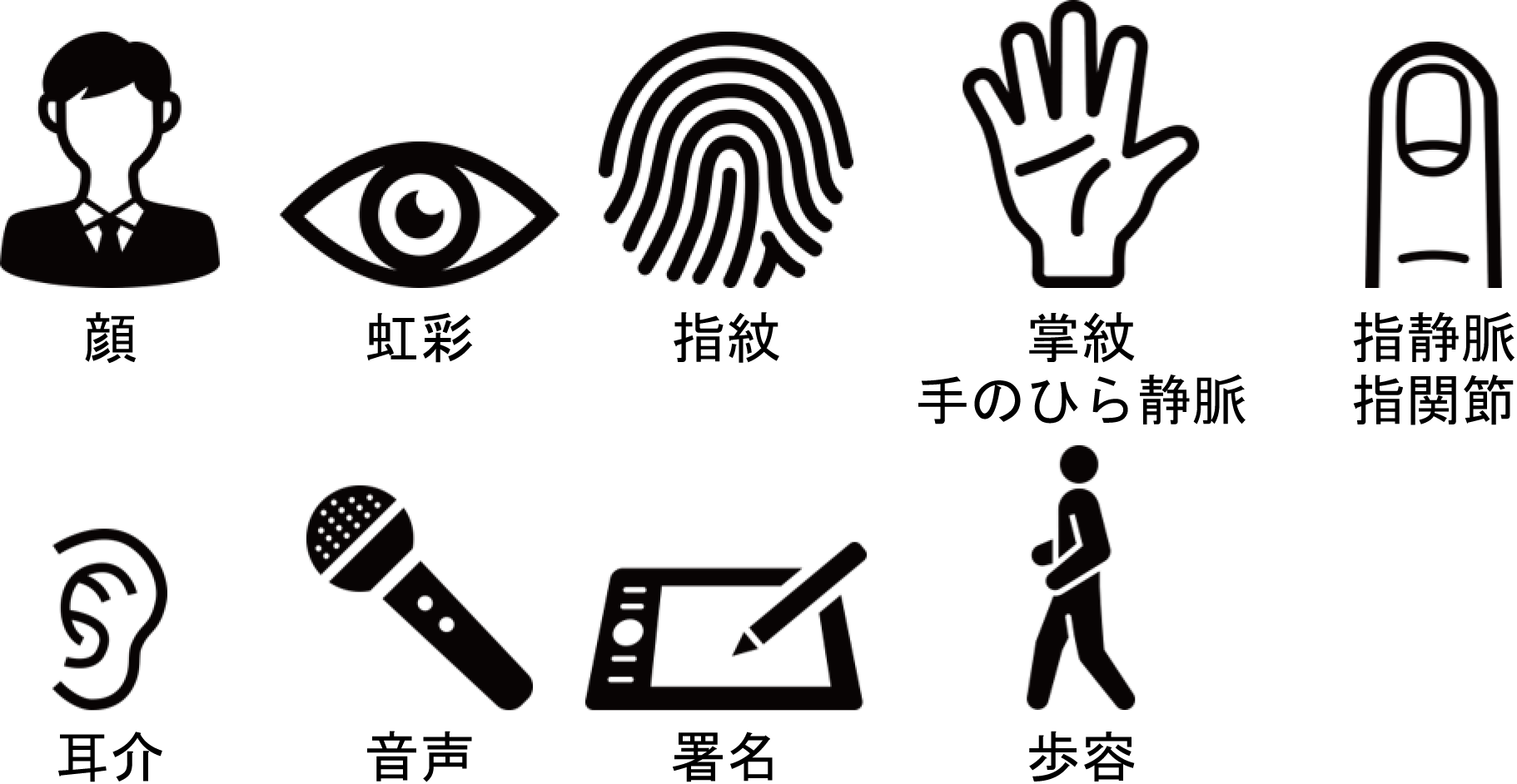
Figure 1: Biometric traits
Biometrics via Image Matching
Biometrics research is conducted for each trait. At international conferences, the most frequently presented topics are face, iris, and fingerprint recognition—in particular, face recognition is studied extensively not only in biometrics but also in computer vision. Our laboratory has proposed methods based on image matching that evaluates similarity between images. The method is called Phase-Only Correlation (POC). POC is an image-matching technique that uses phase information obtained by Fourier transforming images. For technical details, interested readers are referred to references [1] and [2].
Biometric Systems Developed in Our Laboratory
We introduce biometric systems developed in our laboratory (Figure 2).
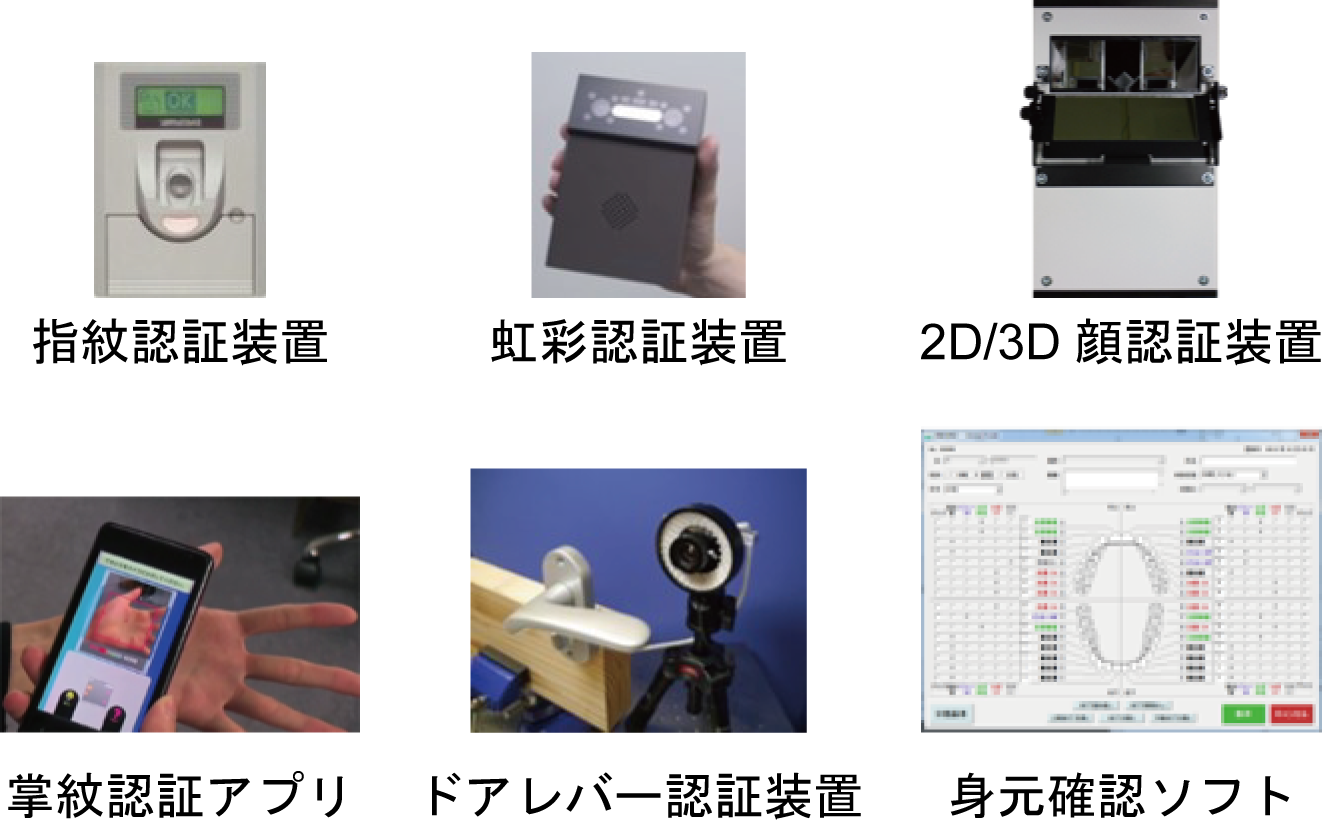
Figure 2: Examples of biometric systems developed in our laboratory
Deep Learning for Biometrics
Many deep-learning-based methods have been proposed in biometrics. In face recognition in particular, deep learning has raised accuracy to levels suitable for practical deployment. Our laboratory is also investigating deep-learning-based approaches.
Biometrics and Security
Thus far we have introduced biometrics for personal authentication. To use biometrics safely, system security must also be considered—not merely deployment of the technology itself.
Secure Face Recognition Systems
Finally, we describe a recent line of work. We investigate methods that embed face images into other images using steganography while still enabling face recognition. For details, see references [16] and [17].
Summary
We have outlined biometrics research. Beyond personal authentication, security has become an important research theme in biometrics.
References
- T. Aoki et al., "位相限定相関法に基づく高精度マシンビジョン," IEICE Fundamentals Review, vol. 1, no. 1, pp. 30-40, July 2007 (Open access).
- K. Ito et al., "Recent advances in biometric recognition," ITE Trans. Media Technology and Applications, vol. 6, no. 1, pp. 64-80, January 2018 (Open access).
- K. Ito et al., "Cancelable face recognition using deep steganography," IEEE Trans. Biometrics, Behavior, and Identity Science, vol. 6, no. 1, pp. 87--102, January 2024 (Open access).
- G. Hanawa et al., "Face image de-identification based on feature embedding for privacy protection," Proc. Int'l Conf. Biometrics Special Interest Group, September 2023 (Open access).